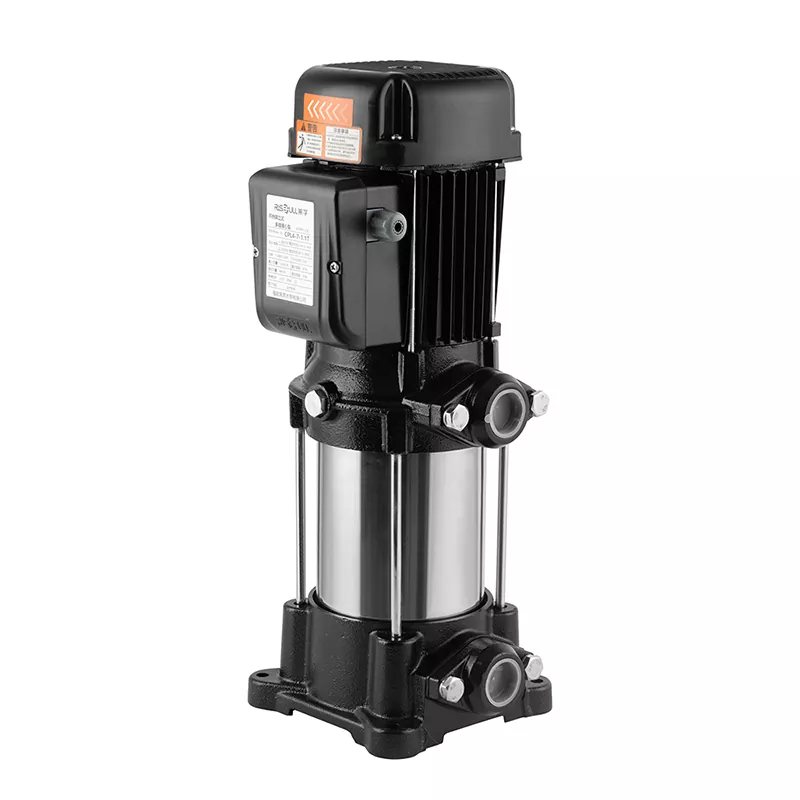
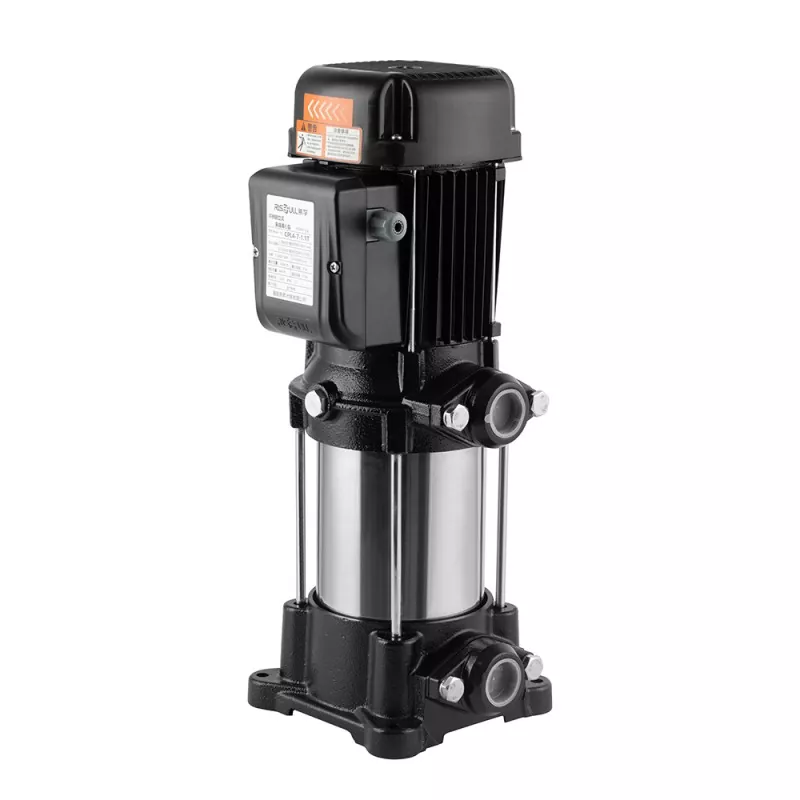
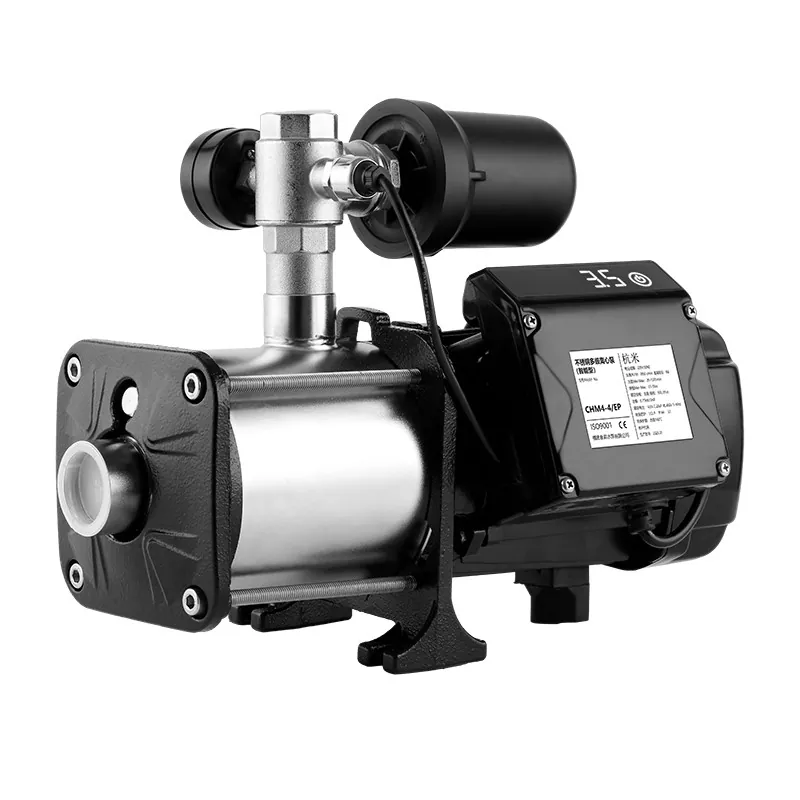
The industry’s demand for maintenance-free, intelligent pumping solutions has led to a breakthrough series that combines self-priming agility with vortex dynamics. Our engineering portfolio addresses this need through specialized models, each tailored for distinct operational profiles. The Intelligent Self‑priming Regenerative Pump leverages regenerative turbine technology for high-pressure, low-flow scenarios common in boiler feed and pressure boosting. The Automatic Self‑priming Regenerative Turbine Pump features an integrated pressure tank and electronic control board, enabling hassle-free automatic operation for domestic water supply. For sensitive chemical transfer, the Intelligent Self‑priming Side Channel Pump offers a sealless magnetic drive option that prevents any leakage risk. These systems share a core philosophy: use smart sensors to adapt motor speed and detect faults before they cause damage. Wetted components across the range are made from electropolished 304 or 316 stainless steel, ensuring compliance with FDA and WRAS standards where applicable. The user interface on each pump provides real-time data on flow rate, totalized volume, and energy consumption via a backlit LCD screen. Installation flexibility is enhanced by the rotatable volute, which can be reconfigured in the field within minutes. By using high-efficiency permanent magnet motors, these pumps achieve IE4 efficiency levels, substantially lowering electricity costs. Thousands of units have been deployed in applications ranging from gray water recycling in eco-hotels to drip irrigation in arid farms, proving their durability in harsh conditions. The series is backed by a five-year warranty on motor components and global service support. Rigorous lifecycle testing has validated over 20,000 operational cycles without notable performance degradation. The intelligent algorithm compensates for voltage fluctuations, maintaining steady flow even in areas with unstable grid power. By incorporating a real-time clock, each pump in this series can log operation history and generate maintenance reports automatically. The quick-connect electrical terminals and color-coded wiring harnesses simplify installation, reducing contractor time on site. Moreover, the pumps are designed for parallel operation, allowing multiple units to be manifolded for higher flow demands without complex control panels. This modularity has proven indispensable in municipal water supply backup systems and mining slurry transfer. Training requirements for end-users are minimal due to the intuitive, pictogram-based user interface.
The Smart Self‑priming Vortex Pump is the definitive choice for liquids contaminated with suspended solids or entrained air. Unlike conventional centrifugal designs, its vortex impeller is set back from the main flow stream, creating a swirling action that keeps solids in suspension and prevents impeller contact. This configuration drastically reduces wear from abrasive media and allows the pump to handle sludge, fruit pulp, or sand-laden water with minimal maintenance. Operators prize the Smart Self‑priming Vortex Pump for its ability to run dry for extended periods without damage, a critical feature in sump drainage or tank emptying tasks. The self-priming mechanism uses a liquid reservoir on the first fill; subsequent starts require no manual intervention, even after long shutdowns. Field tests show that the Smart Self‑priming Vortex Pump achieves prime within 90 seconds on a 7-meter suction line. Key product highlights include:
| Parameter | Specification |
|---|---|
| Flow Rate (Q) | 15 – 230 L/min |
| Maximum Head (H) | 60 m |
| Motor Power (P2) | 0.55 – 3.0 kW |
| Rated Voltage / Frequency | 1~110-120V/60Hz; 1~220-240V/50Hz; 3~380-415V/50Hz |
| Self-Priming Height (suction lift) | 9 m |
| Liquid Temperature | -20°C to +120°C |
| Maximum Working Pressure | 6 bar |
| Inlet/Outlet Connection | Rc 1” ~ Rc 2” |
| Insulation Class | F (155°C) |
| Enclosure Protection | IP56 / NEMA 4X |
| Shaft Material | Hastelloy C-276 |
| Mechanical Seal | Single unbalanced, graphite vs. ceramic/SiC |
| Weight (net) | 10 – 28 kg |