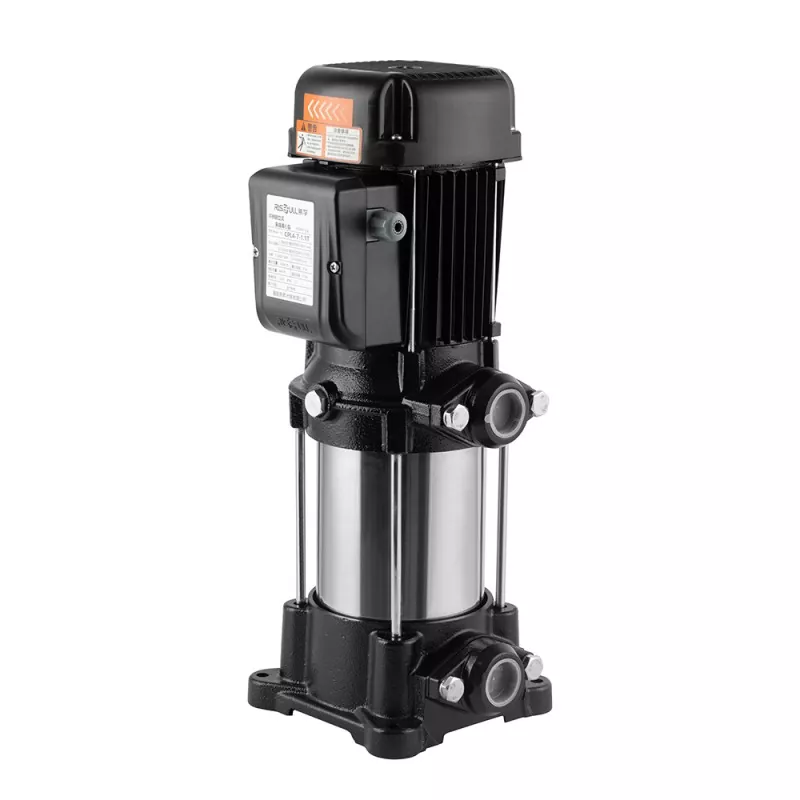
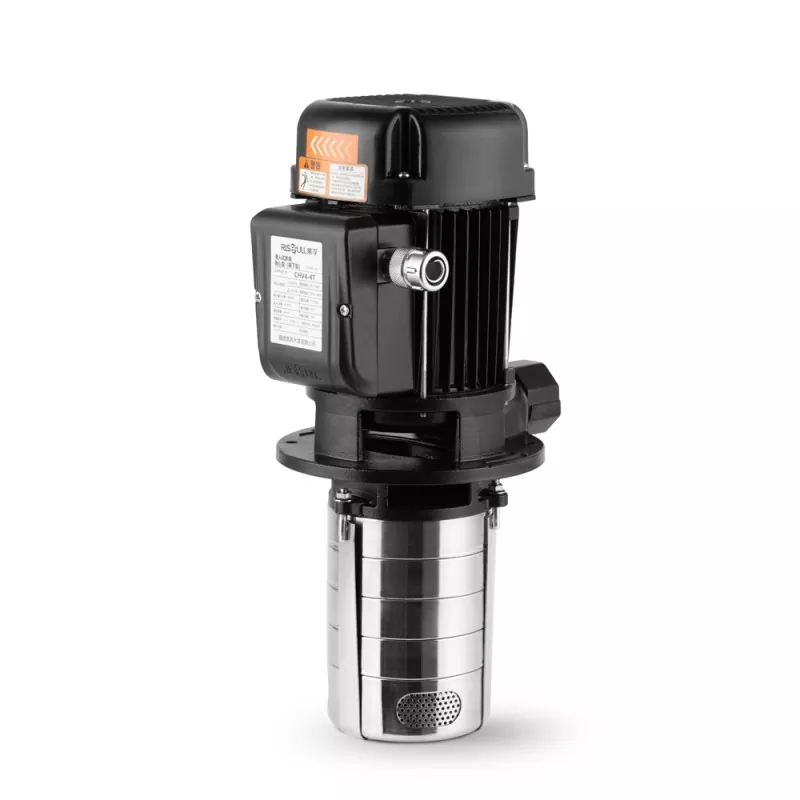
The Intelligent Self‑priming Regenerative Pump elevates liquid transfer operations with a design that fuses autonomous priming, high‑pressure turbine performance, and advanced diagnostic electronics. Sharing core hydraulic principles with the Automatic Self‑priming Regenerative Turbine Pump, this model extends capability through an adaptive control algorithm that continuously compares suction behaviour against the stable vortex handling of the Smart Self‑priming Vortex Pump. The precision‑matched side channels, analogous to those in the Intelligent Self‑priming Side Channel Pump, generate steep head curves without sacrificing efficiency at low flow. Built‑in dry‑run detection, phase failure monitoring, and automatic re‑prime cycling allow unattended operation in boiler feeding, condensate recovery, and pressure boosting networks. A cast iron or stainless‑steel volute, paired with an AISI 304 hardened impeller and SiC/SiC mechanical seal, ensures compatibility with clean water, light condensates, and mild chemicals. Vibration‑dampening motor mounts and a close‑coupled architecture reduce noise and footprint, making the unit suitable for rooftop plant rooms, water treatment skids, and agricultural pressure systems.
The Intelligent Self‑priming Regenerative Pump incorporates a field‑programmable smart controller that executes rapid self‑diagnosis every power cycle. When the pump starts, an optical sensor and a pressure transducer verify prime status; if air is detected, a sequenced suction purge removes air pockets before the impeller engages. During normal duty, the controller logs run‑time hours, starts per hour, and peak motor temperature, flagging anomalies via a local LED indicator or optional remote Modbus RTU interface. Multi‑voltage compatibility (230/400 V, 50/60 Hz) and IP55 protection permit direct outdoor installation, while the integrated check valve and pressure tank connection simplify pipework. Standard protection features include over‑/under‑voltage shutdown, overload relay, and automatic restart after a power interruption. Key engineering data are listed below:
The structural grade materials and closed‑impeller clearance management sustain performance in aggressive suction scenarios, such as hot water return circuits or dissolved‑air flotation tanks. An easily removable inspection cover exposes the impeller and seal assembly without disturbing the motor or pipework, cutting maintenance downtime by over 60% compared to traditional split‑case designs. For variable‑flow installations, the pump supports external VFD control to flatten the system curve while maintaining NPSH margins. The table below provides performance benchmarks for four standard frame sizes:
| Model Designation | Flow Range (m³/h) | Max Head (m) | Motor kW | Connection Size | Approx. Weight (kg) |
|---|---|---|---|---|---|
| IRP‑05S | 0.5 – 3.4 | 125 | 0.75 | G1″ × G1″ | 24 |
| IRP‑12M | 1.2 – 8.0 | 162 | 3.0 | G1¼″ × G1¼″ | 38 |
| IRP‑18L | 2.5 – 14.0 | 195 | 7.5 | G2″ × G1½″ | 55 |
| IRP‑22X | 4.0 – 18.0 | 210 | 11.0 | G2½″ × G2″ | 72 |
All wetted elastomers comply with WRAS/ACS/KTW standards for potable water contact, and optional ATEX‑rated motors extend service into Zone 2 hazardous gas environments. The regenerative turbine stage maintains a near‑flat curve in the lower third of the flow span, delivering exactly the pressure target without the use of relief valves. Coupled with the intelligent prime‑loss recovery algorithm, the Intellingent Self‑priming Regenerative Pump delivers a step change in reliability for critical water supply, process cooling, and reverse osmosis feed applications where even brief pressure droops are unacceptable.