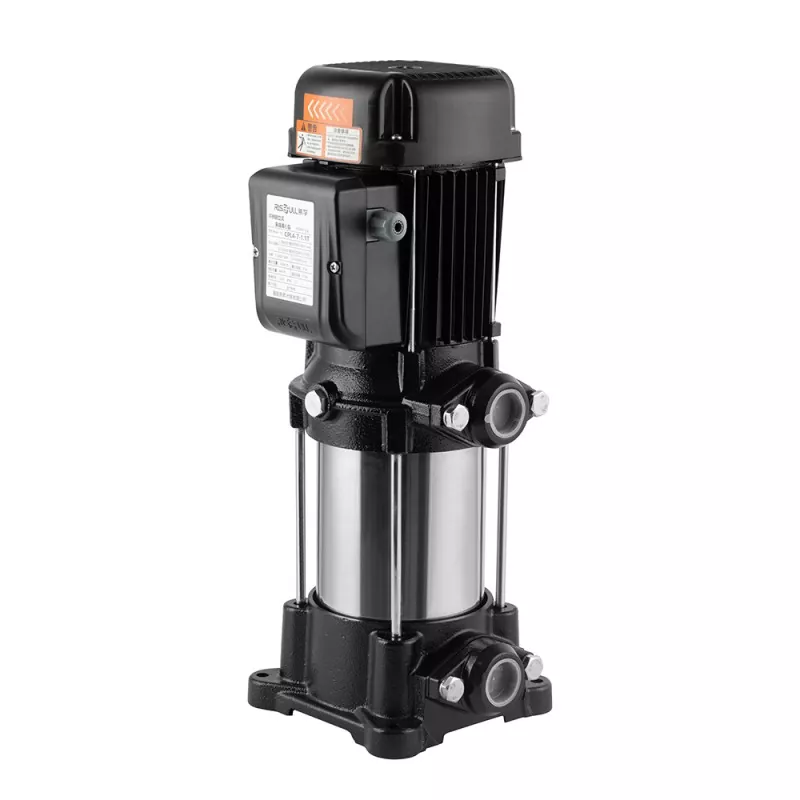
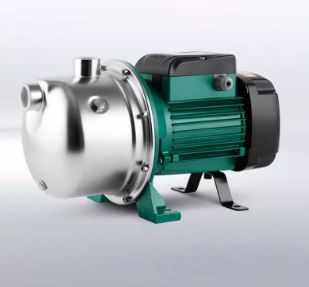
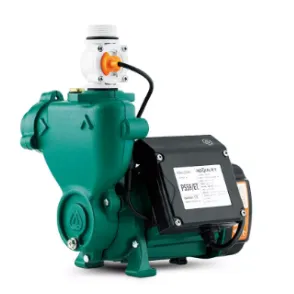
Few things ruin a morning shower like water that dribbles instead of sprays. Or a kitchen tap that takes a full minute to fill a pot. Or a gas water heater that clicks on and off every few seconds because the flow is too weak to keep it running.
These aren't plumbing failures in the usual sense. The pipes aren't leaking. The water heater isn't broken. The real problem is insufficient or unstable water pressure at the point of use.
A household booster pump is designed to solve exactly this. But buying one means matching the pump's capabilities to a specific set of conditions — how high the water needs to go, how many taps might run at once, and what kind of automatic control actually makes life easier instead of adding another box to maintain.
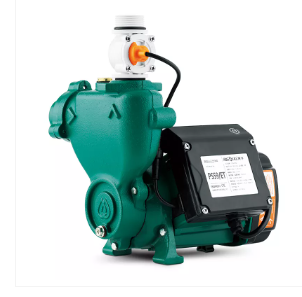
City water systems are designed to deliver adequate pressure to the building's main meter, not to every individual tap. By the time water travels through the main line, rises several floors, and passes through elbows, tees, and shutoff valves inside the walls, what arrives at a third-floor showerhead may be less than half the pressure that left the street main.
Here is what different pressure ranges actually feel like at a typical showerhead:
| Water pressure | What it feels like | What works at this pressure |
|---|---|---|
| Above 0.3 MPa (3 bar) | Strong spray, potentially uncomfortable | Everything works fine, but pressure reduction may be needed |
| 0.2 – 0.3 MPa (2-3 bar) | Comfortable shower, good coverage | Ideal range for most household fixtures |
| 0.1 – 0.2 MPa (1-2 bar) | Noticeably weak, but usable | Water heater may have trouble igniting |
| Below 0.1 MPa (1 bar) | Dribble, not a spray | Gas water heaters often fail to start; dishwasher/washing machine cycles take much longer |
Many homes fall into the bottom two categories, especially those on upper floors of older buildings, at the far end of long supply lines, or in areas with aging municipal infrastructure.
Not every low-pressure situation calls for the same solution. The right pump depends on where and why pressure drops.
Scenario one: the top floor of a walk-up apartment building. Water reaches the floor but comes out weak. The building has no rooftop tank, or the tank sits at the same level as the apartment. Here the pump needs to boost incoming city pressure — typically from 0.05-0.1 MPa up to 0.2-0.3 MPa. A pump with 15-20 meters of head (total pressure capacity) is usually sufficient.
Scenario two: a gas water heater that refuses to light. This is often a flow problem more than a pressure problem. Many tankless water heaters require a minimum flow rate of 3-5 liters per minute just to activate. If the kitchen tap runs fine but the shower is weak, installing a small pump on the cold water line feeding only the water heater can solve the issue without pressurizing the entire house.
Scenario three: a house with its own well. No municipal pressure exists at all. Water must be pulled up from the well and then pushed to taps. This requires a pump with self-priming capability — able to draw water from depths of 6 to 9 meters — not just a pressure booster. The suction lift rating matters here more than with city water applications.
Scenario four: a large house with multiple bathrooms. The problem here isn't low pressure at the main. It's that pressure drops sharply when two bathrooms are used at the same time. A standard booster pump with on/off control will still cause pressure fluctuations. A variable frequency drive pump that adjusts motor speed to maintain constant pressure — regardless of how many taps are open — makes the biggest difference in this scenario.
Pump performance is described by head (measured in meters) and flow rate (measured in liters per minute). Neither number alone tells the full story.
Head refers to how high the pump can push water vertically. A pump rated for 20 meters of head can, theoretically, lift water to a tap 20 meters above it. But that is the maximum at zero flow. At that height, water barely trickles. The useful working point is somewhere lower.
Flow rate measures how much water the pump delivers per minute. A typical shower head uses 8-12 liters per minute. A kitchen faucet uses 6-10. A washing machine draws 10-15 when filling. A household pump that delivers 30-40 liters per minute at its working pressure point can handle one shower plus one faucet simultaneously — adequate for most apartments and small houses.
Here is how typical pump specifications translate into real performance:
| Rated head | Actual usable pressure at tap | Suitable for |
|---|---|---|
| 10-15 meters | 0.1-0.15 MPa | Single tap or water heater only |
| 15-20 meters | 0.15-0.2 MPa | Apartment, 1-2 people |
| 20-30 meters | 0.2-0.3 MPa | Standard house, 3-4 people |
| 30+ meters | 0.3+ MPa | Large house, multiple bathrooms or long pipe runs |
The relationship between head and flow is inverse. A pump that delivers 45 liters per minute at 10 meters of head might deliver only 20 liters per minute at 20 meters of head. Select based on the combination, not the peak number.
A pump that requires manual on-off switching is impractical. No one wants to walk to the utility room before every shower. Automatic start-stop is essential — but different automatic methods work very differently.
Pressure switch control is the oldest and simplest. A mechanical switch detects when outlet pressure drops below a set point and turns the pump on. When pressure reaches the cut-off point, the pump stops. The problem is slow drips. A leaking toilet flapper or a dripping faucet causes the pressure to drop slowly, triggering the pump to run for a few seconds, stop, run again, stop again — cycling dozens of times per hour. This wears out the pressure switch and the pump motor prematurely.
Flow switch control solves the drip problem. The pump senses actual water movement and only runs when flow is detected. A slow drip produces no flow signal, so the pump stays off. The tradeoff is that flow switches require more internal space and can be more expensive to manufacture. They also need a short delay after flow stops to prevent rapid cycling when taps are opened and closed quickly.
Pressure plus flow control combines both methods. The pump uses pressure sensing as a backup but relies primarily on flow detection. This is the current standard for mid-range and premium household pumps. Fujian Risefull Pump Co., Ltd., a manufacturer based in Fuan City, Fujian Province, has focused its engineering effort precisely on this control logic — making the pump behave the way a normal household expects it to behave, without false starts or unexplained stops.
Variable frequency drive (VFD) control adds continuous speed adjustment instead of simple on-off. The pump speeds up when more taps open and slows down when fewer are used, maintaining nearly constant pressure regardless of demand. The shower does not change temperature or flow rate when someone turns on the kitchen tap. This is the most comfortable experience, but also the most expensive.
Placement matters more than many homeowners realize.
A pump installed directly on a concrete floor without rubber vibration pads will transmit noise through the floor structure. What sounds like a moderate hum in the utility room becomes a low-frequency rumble in the bedroom below.
A pump placed too close to an elbow fitting on the inlet side may experience cavitation — tiny vapor bubbles forming and collapsing in the water, which sounds like gravel passing through the pump and gradually erodes the impeller. Straight pipe of 5-10 times the inlet diameter before the pump prevents this.
A pump installed outdoors without weather protection will eventually suffer from moisture ingress (even with IPX4 or IP44 ratings) and, in freezing climates, cracked housings from water left inside that turns to ice.
The best locations are indoors, near the water meter or main shutoff valve, with adequate spacing around the pump for maintenance and airflow. A drain valve below the pump allows winterization if freezing is possible.
In real-world use, most pump complaints trace back to three things that are not the pump's fault.
Frequent cycling is almost always a plumbing leak. A toilet flapper that fails to seal or a faucet cartridge that weeps water creates a slow pressure drop. The pump responds by turning on, restoring pressure, then shutting off — only to repeat the cycle a few minutes later. Fixing the leak stops the cycling.
No water when the pump runs on a self-priming pump usually means the pump lost its prime — air entered the suction line. A loose fitting or a hairline crack on the intake side allows air in without visible water leakage. At the suction side, pressure is below atmospheric; air enters, but water does not leak out. This is difficult to find but easy to fix once located.
Low flow after months of normal operation points to a clogged inlet strainer or scale buildup inside the pump. Areas with hard water accelerate scale formation. Cleaning the strainer and running descaling solution through the pump restores performance. A pump does not "lose" its performance over time without a physical reason.
Loud operation when the pump is new often means rigid pipe connections transmitting vibration. Short sections of flexible hose on the inlet and outlet break the vibration path. If the pump was quiet initially and became loud, check for loose mounting bolts or a failing bearing.
Fujian Risefull Pump Co., Ltd. began operations in 2004 in Fuan City, Fujian Province — an area with a concentrated pump and valve manufacturing industry. Unlike manufacturers that focus strictly on passing factory tests, Risefull emphasizes what the company calls the transition from "qualified quality" to "excellence in use."
The practical difference shows up in control system behavior. A pump that technically meets its pressure and flow specifications but cycles unnecessarily, responds slowly to flow changes, or requires frequent recalibration is qualified but not excellent. Risefull's engineering priority has been to handle the complex work of pump selection and control logic internally so that the user experience becomes simpler — install it, plug it in, and largely forget about it.
The company produces a range of pumps and control equipment for household water supply, pressure boosting, and circulation applications, with a focus on making automatic operation genuinely automatic — not something that needs weekly attention.
Entry-level pressure switch pumps with cast iron or plastic bodies cost the least — typically in the lower range for household products. They solve the basic problem of low pressure but may have limitations in noise control and cycling behavior.
Mid-range flow switch or dual-control pumps with better materials and smarter control logic cost moderately more. This category represents the best value for most households — enough improvement to notice every day, without paying for features that might not be needed.
Premium variable frequency drive pumps with stainless steel bodies cost the most. For large houses with multiple bathrooms or for owners who prioritize consistent shower pressure above all else, the additional cost is justifiable.
The pump itself is usually not the largest expense over its service life. Installation labor, pipe fittings, electrical work, and eventual maintenance or replacement add to the total. Choosing a pump that is oversized — more head and flow than needed — does not provide better performance. It increases noise, stresses seals, and may actually reduce service life.
| Household situation | Recommended pump type | Key specification |
|---|---|---|
| Apartment, low pressure but stable | Pressure switch, compact size | 15-20m head, 25-35 L/min |
| Gas water heater won't light | Mini flow-switch pump | 10-15m head, 10-20 L/min |
| Large house, multiple bathrooms | VFD constant pressure pump | 25-35m head, 40-60 L/min |
| Well water supply | Self-priming pump | 6-9m suction lift, 20-40 L/min |
| Rooftank-fed upper floor | Flow control pump | 20-25m head, 30-40 L/min |
Do I need a pump at all, or is something else wrong? Measure pressure at an outdoor spigot or laundry tap using a screw-on pressure gauge. Static pressure (no water running) below 0.15 MPa suggests low supply. Dynamic pressure (water running) dropping sharply below 0.05 MPa suggests restrictive piping or partially closed valves. A pressure reading is more reliable than guessing from shower feel.
What if the pump runs but pressure stays low? Either the pump is undersized for the application, or there is a restriction downstream. Partially closed shutoff valves, clogged aerators, or undersized pipe elbows all create pressure drops that no pump can overcome without increasing flow rate beyond what the pipe can handle.
How loud is an acceptable pump? Most household pumps produce 45-55 dB at one meter — comparable to a refrigerator hum or a quiet conversation. Installation on rubber pads and flexible hose connections reduce transmitted noise. If a pump is loud enough to hear through walls, check for hard pipe connections or loose mounting first.
Can I install it myself? DIY installation is possible but requires basic plumbing skills (cutting and joining pipe), electrical grounding knowledge, and attention to local building codes. Incorrect installation — especially missing a check valve or mounting the pump above the water source on a non-self-priming model — will cause the pump to run dry and fail quickly. Professional installation costs more upfront but reduces the chance of early failure.